
Tooth restoration has entered an era in which science, technology and human creativity work together to reshape the possibilities of modern dentistry. What once depended heavily on physical impressions, conventional X-rays and a dentist’s experience is increasingly guided by digital imaging, computer-assisted planning and precision-driven surgical techniques. These advances are changing how dental professionals approach missing teeth, helping them develop treatment plans that are more personalised, predictable and responsive to each patient’s needs.
At the centre of this transformation are dental implants, which provide a foundation for replacing missing teeth while preserving much of the natural appearance and function of a healthy smile. Yet the real revolution extends beyond the implant itself. It lies in the digital ecosystem that connects diagnosis, treatment planning, surgical placement and the final restoration into a more coordinated process.
From Traditional Impressions to Digital Precision
For decades, restorative dentistry relied on conventional impressions, physical models and two-dimensional radiographs to understand the structure of a patient’s mouth. Although these methods remain useful, they can offer limited insight into the complex relationship between teeth, bone, nerves and surrounding tissues.
Digital dentistry has expanded that perspective.
Intraoral scanners can capture detailed, three-dimensional representations of the teeth and accessible oral structures without the need for traditional impression materials. These digital models allow dental professionals to examine bite relationships, evaluate available space and communicate treatment requirements with dental laboratories more efficiently.
The benefits extend beyond convenience. Digital records can be stored, compared and used throughout different stages of treatment, creating a more consistent reference point for clinical decisions. For patients, this may mean fewer impression-related discomforts and a clearer understanding of the proposed restoration.
However, digital impressions are only one part of the picture. Their greatest value emerges when combined with other technologies that reveal what lies beneath the visible surface.
Three-Dimensional Imaging and the Science of Implant Planning
A successful dental implant treatment requires more than identifying where a missing tooth should be replaced. Clinicians must assess bone volume, anatomical structures and the conditions needed to support long-term stability.
Cone beam computed tomography (CBCT) provides three-dimensional images of the jaw, allowing clinicians to evaluate bone dimensions and the position of important anatomical structures. Unlike conventional two-dimensional radiographs, CBCT can reveal spatial relationships that may otherwise be difficult to appreciate.
When these scans are combined with digital dental models, practitioners can develop a more comprehensive understanding of the patient’s oral anatomy. This information supports decisions about implant position, angulation and depth while helping identify potential complications before surgery begins.
The process represents an important shift in restorative dentistry: planning becomes less dependent on interpreting isolated images and more focused on understanding the mouth as an interconnected anatomical system.
Nevertheless, advanced imaging must be used judiciously. CBCT involves ionising radiation, so its use should be clinically justified, with the smallest appropriate field of view and exposure needed to answer the relevant diagnostic questions.
Computer-Guided Surgery: Turning Plans into Practice
Once a treatment plan has been developed, digital technology can help translate it into a practical surgical approach.
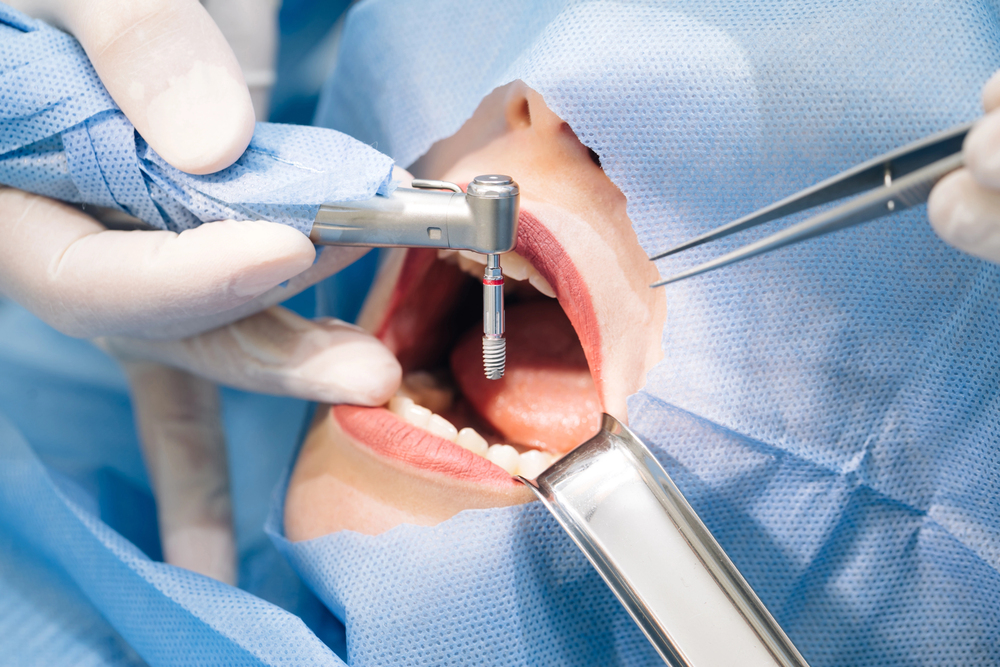
Computer-guided implant surgery uses digital planning software to determine the intended position of an implant. Depending on the case, a customised surgical guide may then be produced using three-dimensional printing. The guide helps direct the surgical instruments towards the planned location.
This approach can improve control over implant positioning and help clinicians work more consistently with the preoperative plan. It can be particularly valuable when anatomical limitations, multiple implants or complex restorations demand careful coordination.
However, guided surgery does not eliminate clinical uncertainty. The accuracy of the outcome depends on image quality, planning decisions, guide fit, surgical technique and the patient’s individual anatomy. Experienced clinical judgement remains essential, and not every patient requires a surgical guide.
The real achievement is the partnership between digital precision and professional expertise. Technology provides a detailed roadmap, but the clinician must still navigate the realities of living tissue.
Digital Design and the Rise of Personalised Restorations
An implant is only one component of a successful restoration. The crown, bridge or full-arch prosthesis must also complement the patient’s bite, facial proportions, speech and aesthetic preferences.
Computer-aided design and computer-aided manufacturing (CAD/CAM) have made it possible to design and produce restorations using digital models. Depending on the case and laboratory workflow, these systems can support the manufacture of crowns, bridges and other prosthetic components with carefully planned dimensions and contours.
Digital smile planning can also help patients visualise aspects of a proposed restoration before treatment is completed. This encourages meaningful discussions about appearance, function and expectations, rather than leaving patients to imagine the result from technical explanations alone.
For people requiring extensive reconstruction, coordinated digital workflows can be a definitive game-changer for these complex rehabilitations. Multiple implants, changes in bite relationships and full-arch restorations demand close cooperation between the dentist, specialist clinicians and dental laboratory. Digital planning can help these professionals work from shared information, improving communication and supporting a more unified treatment strategy.
Still, a digitally designed restoration must be evaluated in the real world. Comfort, tissue health, bite function and long-term maintenance cannot be determined by software alone.
Artificial Intelligence and the Future of Restorative Dentistry
Artificial intelligence is beginning to influence dental imaging, data analysis and clinical workflow management. AI-assisted tools can help identify anatomical features in scans, organise information and highlight findings that may warrant closer examination.
In implant dentistry, these capabilities may support more efficient planning and help clinicians assess complex information. However, AI should be understood as a decision-support tool rather than an independent diagnostician. Its outputs require professional interpretation, and the quality of its recommendations depends on the data and systems involved.
As digital technologies mature, their greatest contribution may be the way they connect previously separate stages of care. Better communication between imaging, planning, manufacturing and follow-up could make restorative treatment more coordinated and easier to evaluate over time.
A More Thoughtful Future for Tooth Restoration
The digital revolution in implant dentistry is not simply a story about faster scanners, sophisticated software or automated manufacturing. It reflects a broader movement towards treatment that is more carefully planned, individually tailored and informed by measurable clinical information.
For Australian patients considering implant treatment, these developments offer encouraging possibilities, but technology should never be the sole measure of quality. Clinical experience, appropriate diagnosis, healthy gums, sufficient bone, patient expectations and ongoing maintenance remain fundamental to successful outcomes.
Modern dental implants demonstrate what becomes possible when biological understanding and digital innovation work together. The ultimate goal is not to make dentistry more technological for its own sake. It is to use technology thoughtfully, helping restore the everyday experiences that missing teeth can disrupt: comfortable eating, confident speaking and the freedom to smile without hesitation.
In the end, the most meaningful innovation is not the machine that designs a restoration or the software that maps a surgical pathway. It is the opportunity to bring precision and compassion together, creating solutions that serve both the functional needs of the mouth and the deeply personal meaning of a healthy smile.